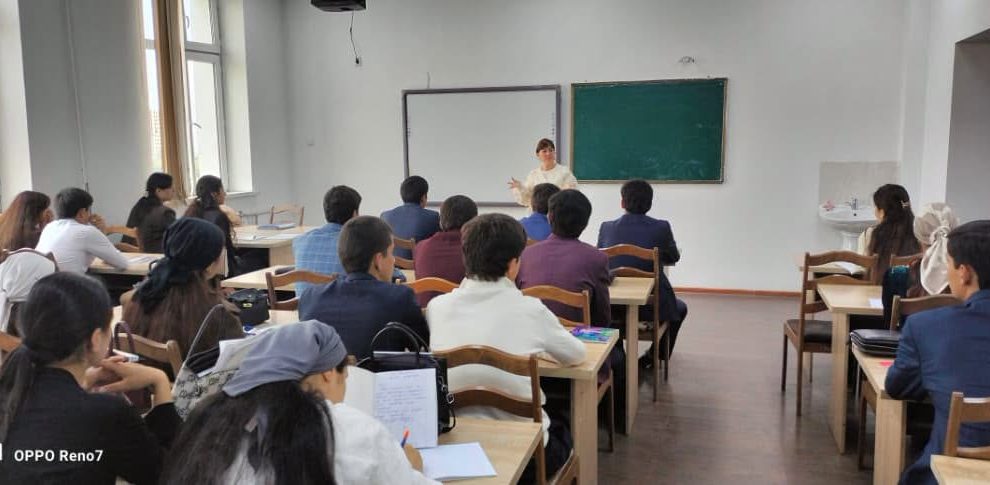
As part of efforts to strengthen international scientific and educational cooperation, expand academic ties, and exchange advanced international expertise, a demonstration lecture entitled “Scoring in Credit Institutions of the Russian Federation” was held at the International University of Tourism and Entrepreneurship of Tajikistan.
The lecture was organized and delivered by the Head of the Department of International Tourism at Saint Petersburg State University of the Russian Federation for second-year students majoring in Financial and Banking Economics.
The session addressed theoretical and practical aspects of using scoring systems in credit institutions, modern methods for assessing clients’ creditworthiness, credit risk management, and the role of digital technologies in improving the operations of financial and banking institutions.
The visiting guest provided insights into the economic foundations of credit scoring, the use of statistical models and analytical algorithms to assess financial risks, mechanisms for making lending decisions, and the experience of credit institutions in the Russian Federation in implementing modern customer assessment technologies.
Particular attention was given to the use of artificial intelligence, Big Data analytics, the automation of lending processes, improving the transparency of financial decisions, and reducing the risk of loan defaults.
During the demonstration lecture, students became familiar with the principles of credit rating development, key indicators used to assess borrowers’ repayment capacity, risk analysis methods, and the practical application of scoring systems in commercial banking.
The session provided an opportunity for academic and practical exchange. Participants discussed the advantages and limitations of scoring systems, the importance of digitalizing banking services, and opportunities to apply international best practices within the banking system of the Republic of Tajikistan.
It was emphasized that studying the experience of foreign credit institutions in applying modern financial risk assessment technologies is essential for developing students’ professional skills, fostering analytical thinking, and preparing competitive specialists in finance and banking.
It is worth noting that organizing such demonstration lectures with the participation of international scholars and specialists contributes to improving the quality of education, strengthening the connection between theoretical knowledge and practical experience, and expanding international scientific and educational cooperation.
As part of its policy of internationalizing scientific and educational activities, the International University of Tourism and Entrepreneurship of Tajikistan continuously takes effective measures to attract international scholars and professors, organize academic lectures and demonstration classes, and incorporate advanced international practices into the training of highly qualified specialists.